SMILE Program · Project

Flocking Simulator 🐑

Follow your curiosity, whisper to a butterfly, and uncover hidden complexity.

In this project, learners control a virtual dog in an open world to explore animal groups exhibiting collective behavior, such as sheep herds, duck flocks, and bat swarms, as analogies for emergent processes in complex systems. The environment combines interactive simulations, an LLM-based butterfly tutor, and generative learning activities.

Research Questions

  1. How can PAIR-C (Patterns, Agents, Interactions, Relations, and Causality) guide the design of an open-world environment integrating simulations, LLM-based tutoring, and generative learning activities?
  2. How do learners’ conceptual understanding and transfer vary across choice configurations of parameter control and LLM-based agent questioning?
  3. When these choices are available, how do learners enact parameter-control and questioning, and how do their engagement patterns relate to conceptual understanding and transfer?

Inside the Environment

Three lessons of increasing conceptual difficulty, each anchored in a different animal group, with an LLM-based butterfly tutor (powered by GPT-4o) available throughout.

Scroll sideways for more →

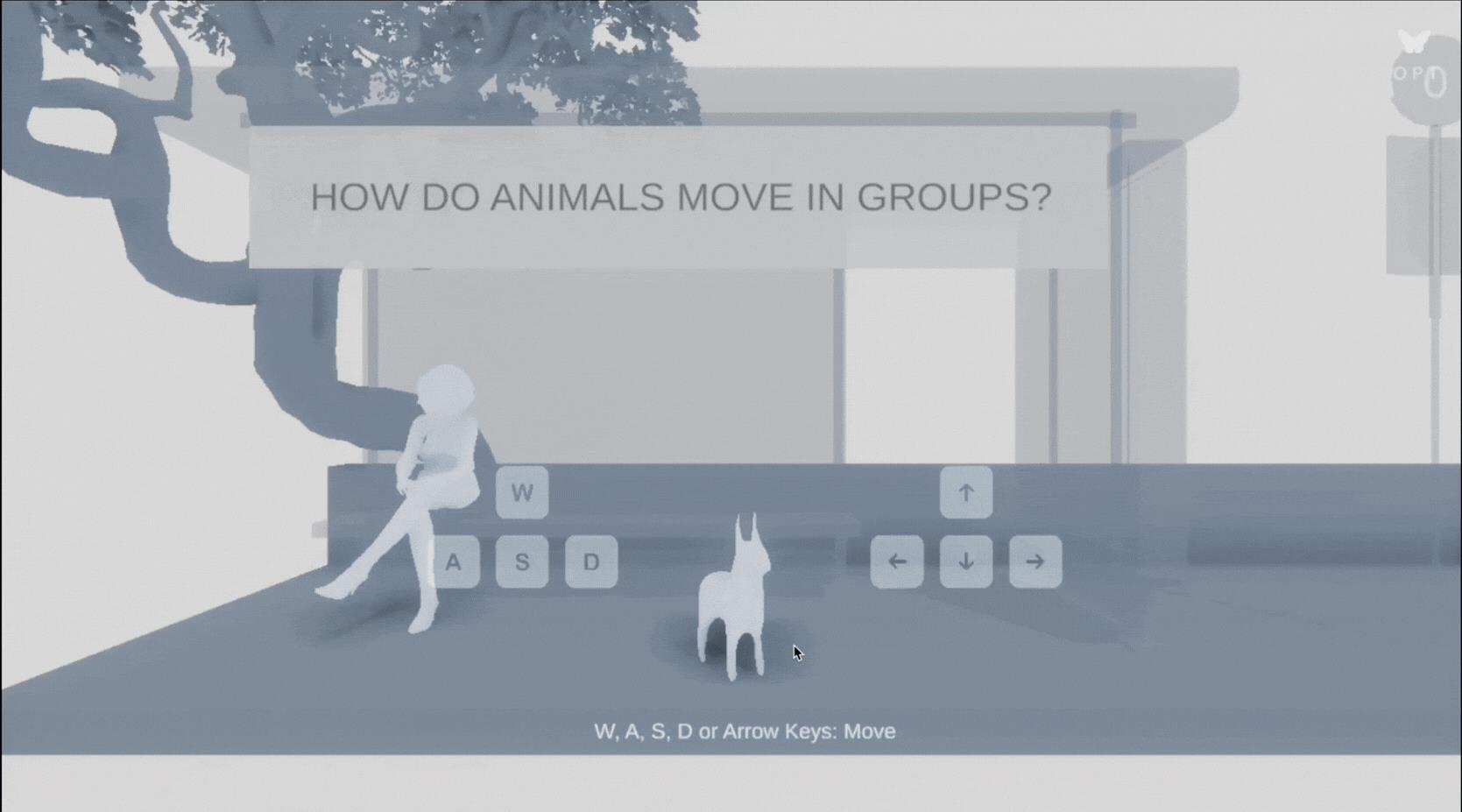
Opening screen asking 'How do animals move in groups?' with WASD and arrow key movement controls shown beside the learner's dog avatar

The Driving Question

The journey starts with a question "How do animals move in groups?"
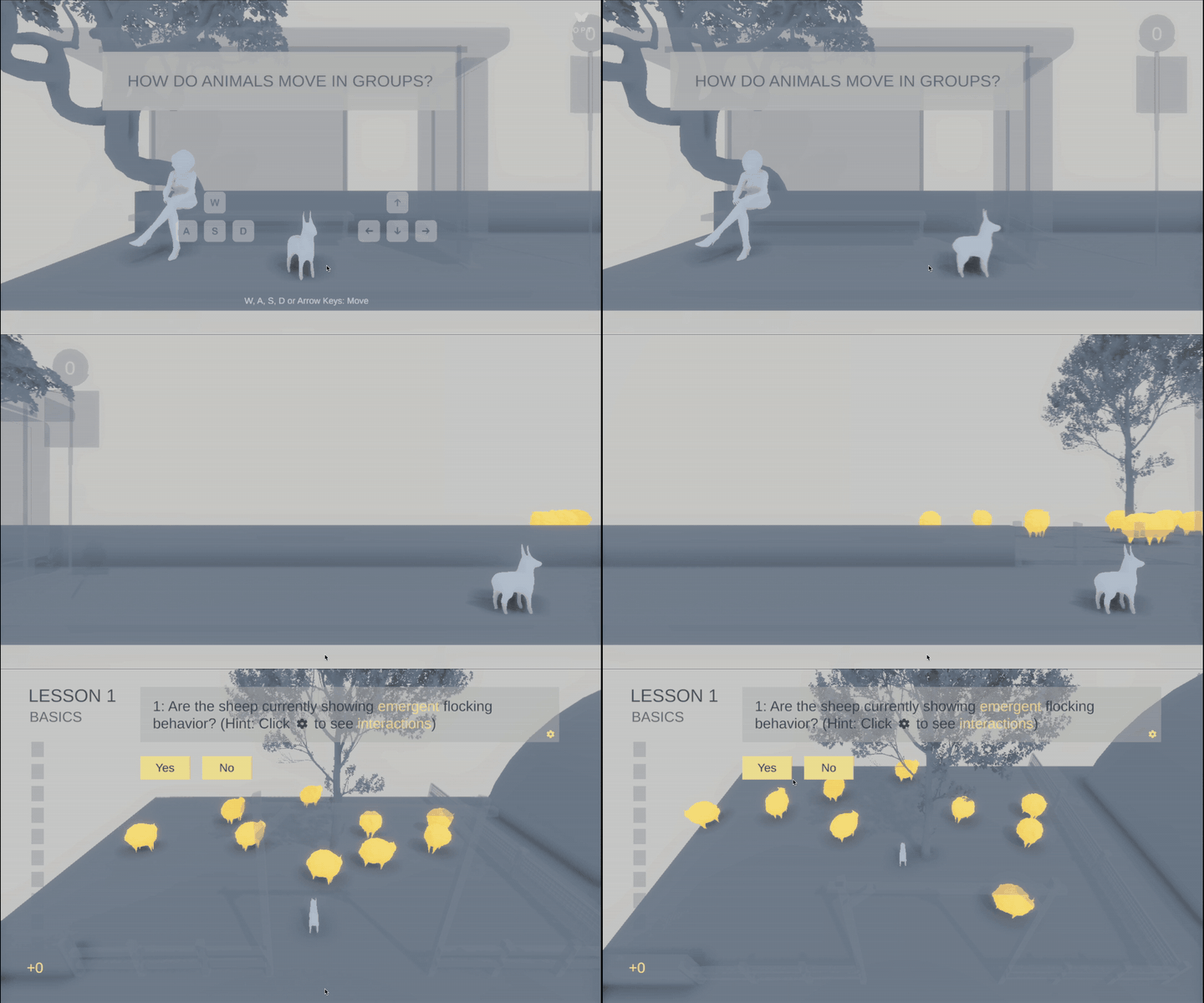
Learner moving the dog avatar freely through the open world of the flocking simulator

Free Exploration

Learners roam the open world as a dog and approach other animal groups freely.
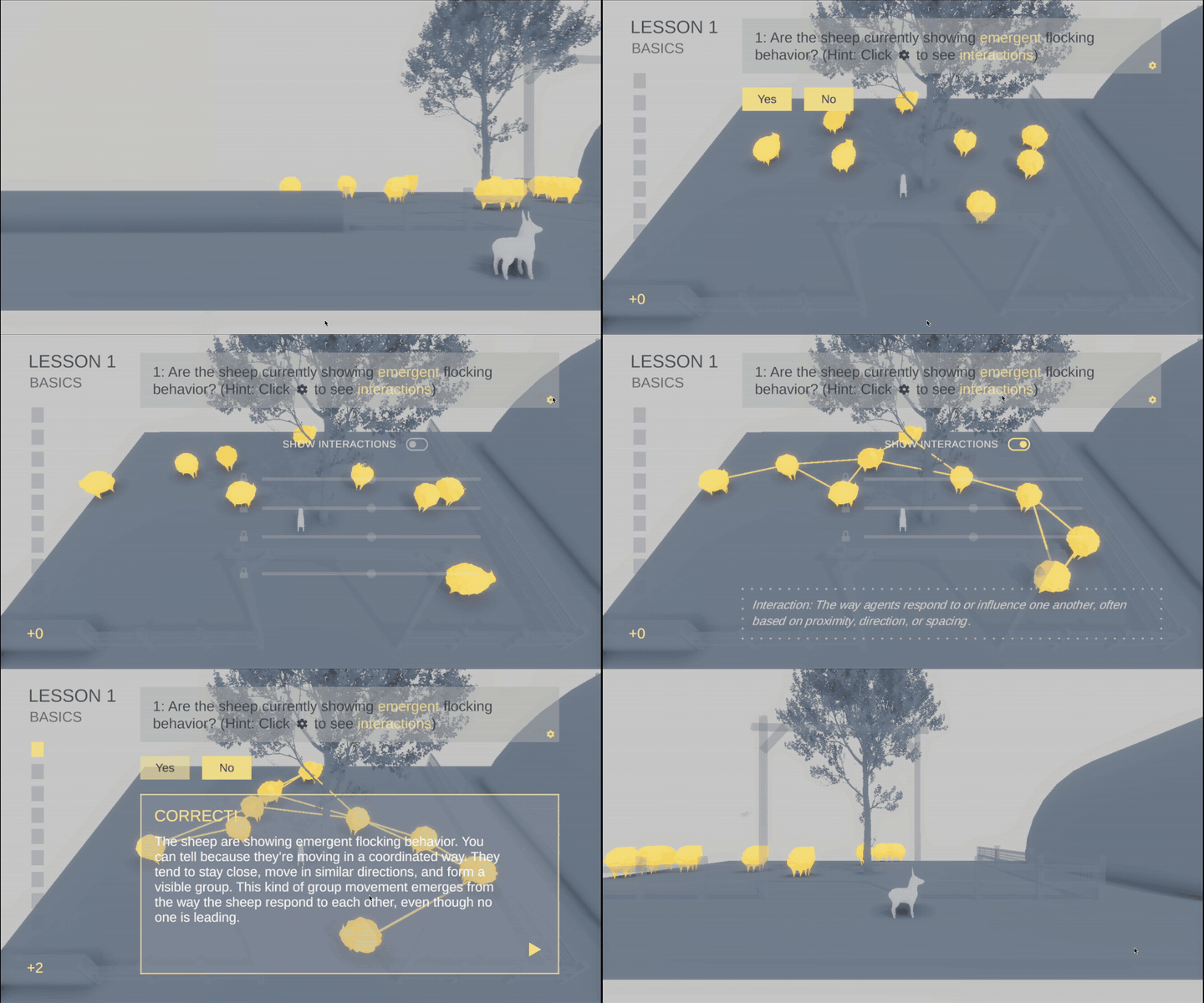
Lesson 1 with the sheep flock: a prediction question and the Show Interactions view revealing the network of local interactions

🐑 Lesson 1 · Sheep

Basic level: observe Patterns, Agents, and Interactions
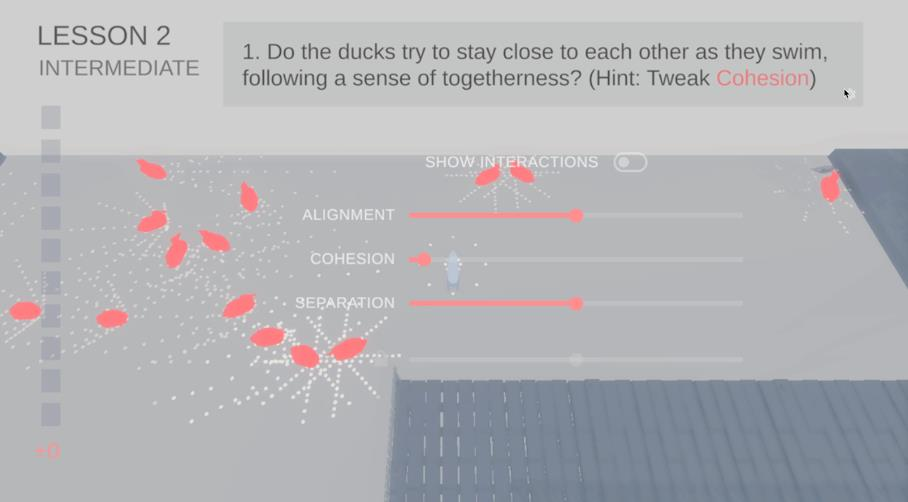
Lesson 2 manipulation controls with alignment, cohesion and separation sliders plus a Show Interactions toggle over the duck flock

🦆 Lesson 2 · Ducks

Intermediate level: learn about the three Boids rules and the Relations that govern animal agents' interactions.
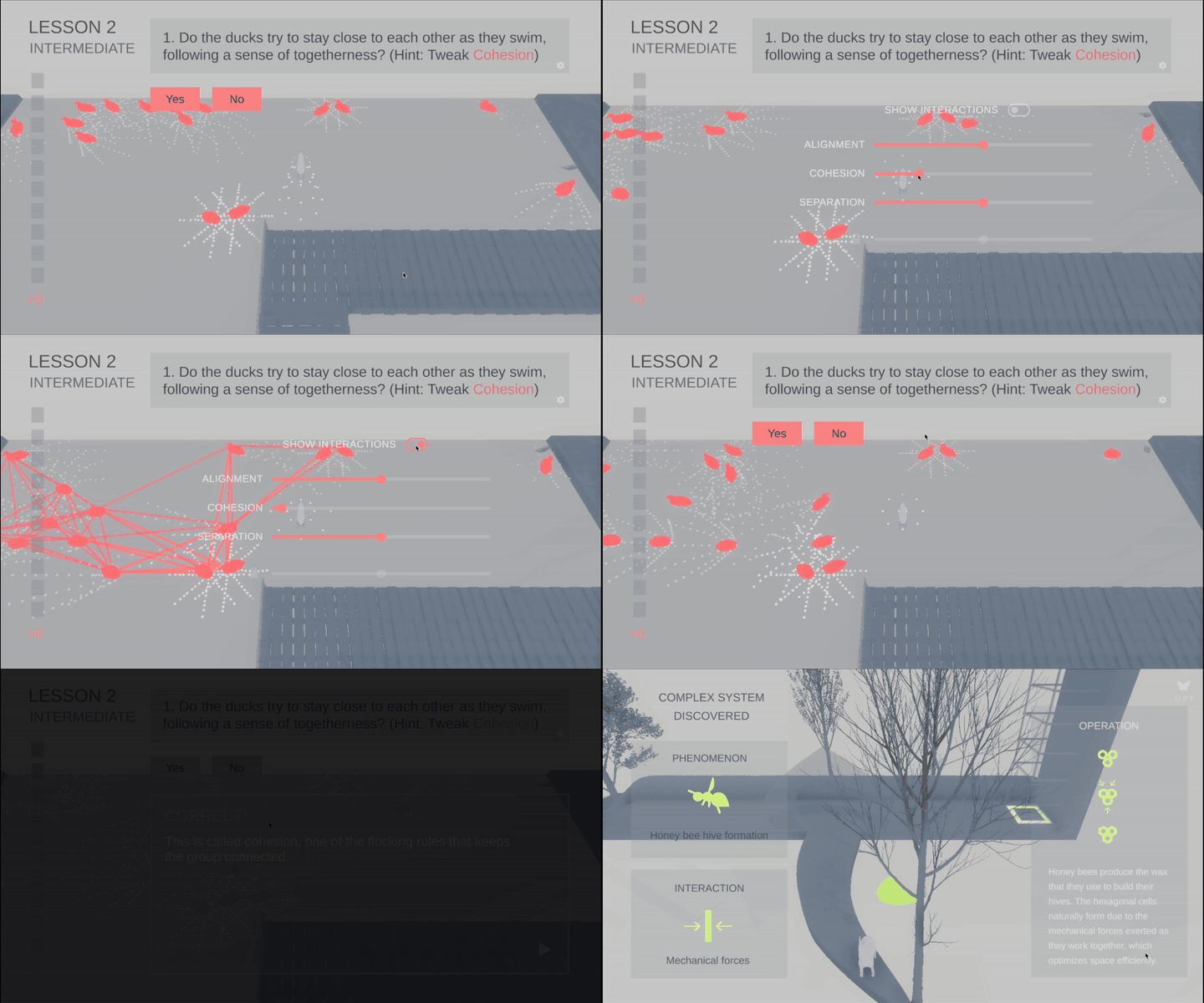
Lesson 2 with the duck flock: a prediction question followed by manipulation of alignment, cohesion, and separation sliders

🦆 Lesson 2 · Manipulation Phase

Modify the Alignment, cohesion, and separation sliders to test predictions.
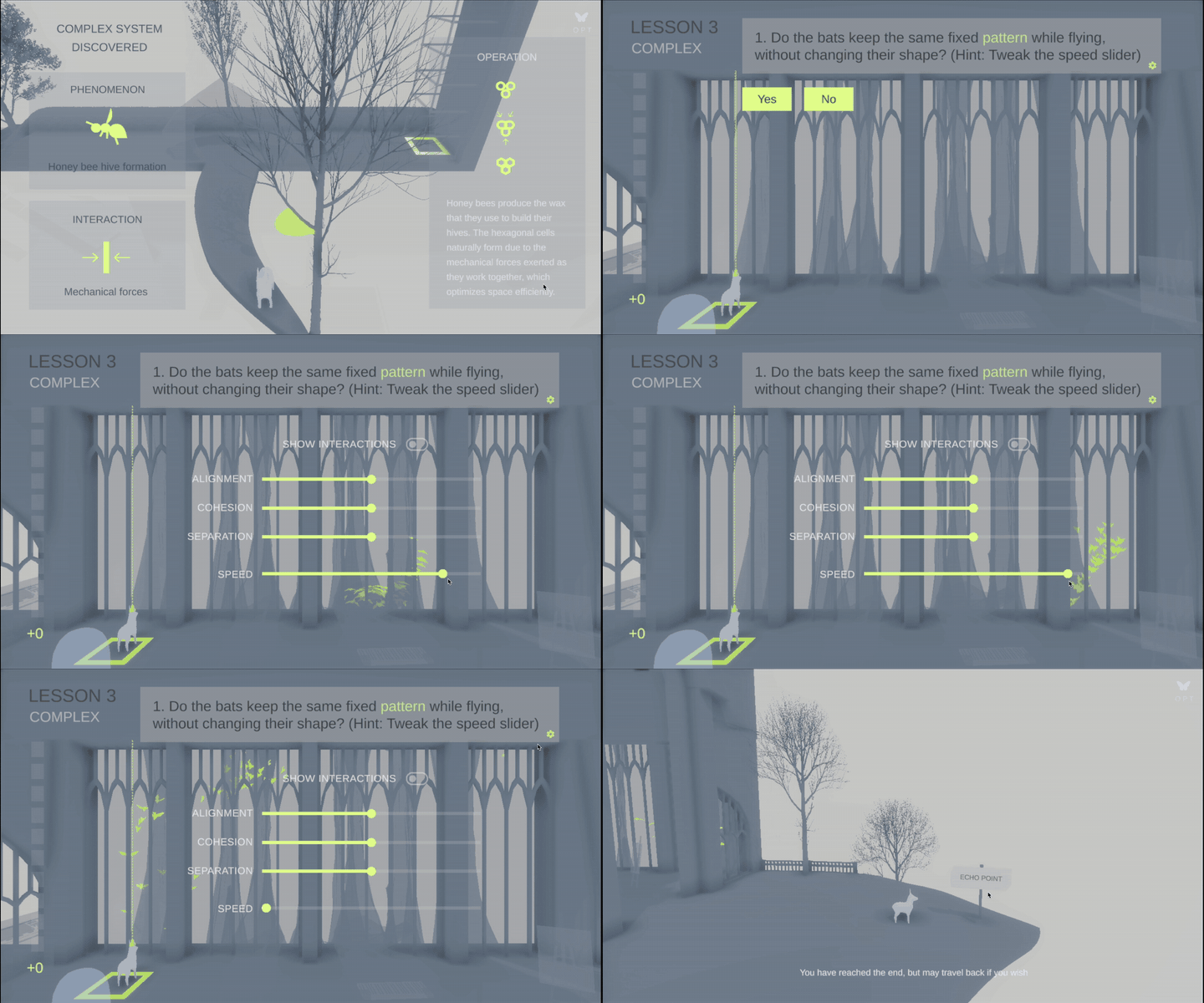
Lesson 3 with the bat swarm: exploring pattern stability by manipulating the speed parameter

🦇 Lesson 3 · Bats

Complex level: Focus on Causality and examine whether the pattern persists when speed changes.
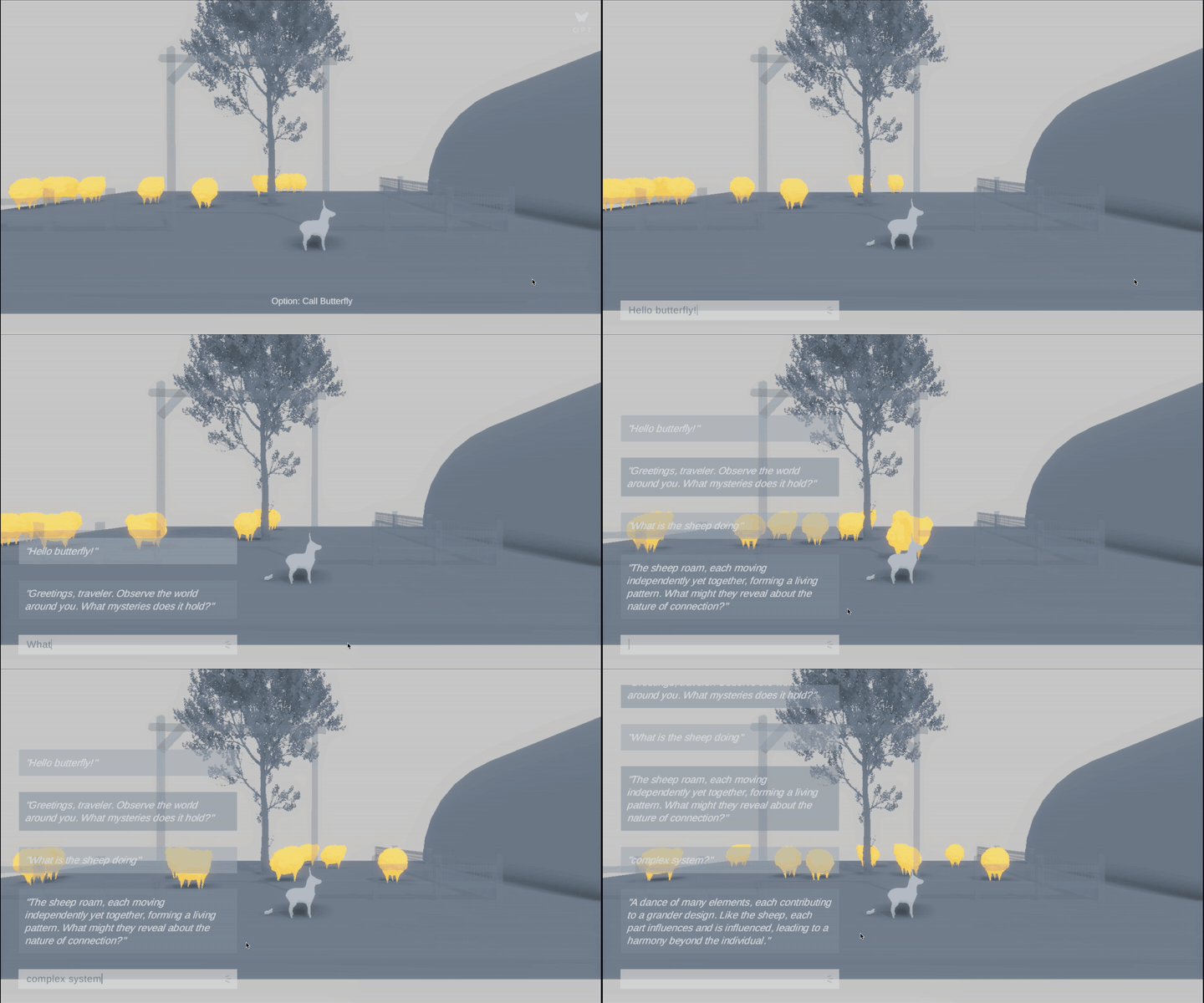
Learner-initiated dialogue with the LLM-based Butterfly Tutor about what the sheep flock is doing

🦋 AI Agent · On Demand

Grounded in the PAIR-C framework, contextualized by regional metadata.
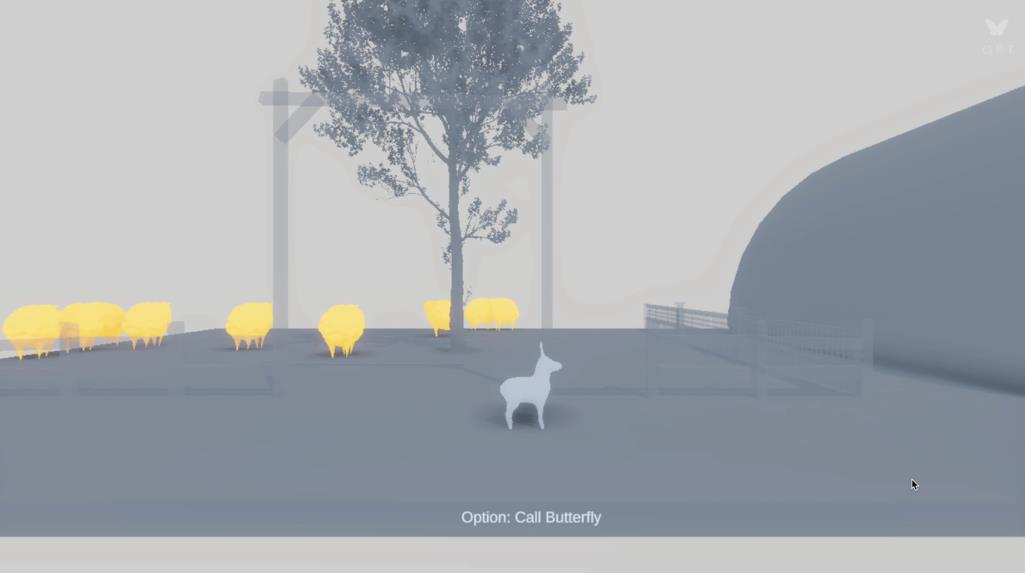
Sheep flock scene with the non-intrusive 'Call Butterfly' prompt at the bottom

🦋 AI Agent · Non-Intrusive

A blinking prompt offers help without demanding it.
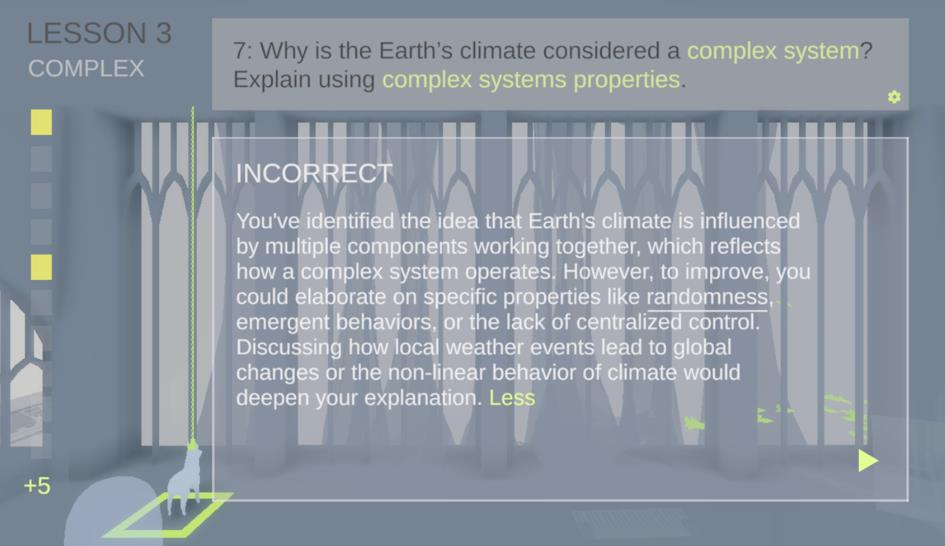
AI-generated corrective feedback elaborating on why an answer about Earth's climate as a complex system was incomplete

Tutor· Corrective Feedback

Elaborated feedback on open-ended answers.

Scientific Outputs

Project Team

Developer

Amit Nair

Researchers

Dr. Man Echo Su (PI, Project Lead)

Dr. Lidia Altamura (Postdoc collaborator)

Amit Nair (Research Assistant)

Prof. Tomohiro Nagashima (Advisor)

Design Partners

Developed through participatory design with a high school biology teacher and a domain expert in complexity science.